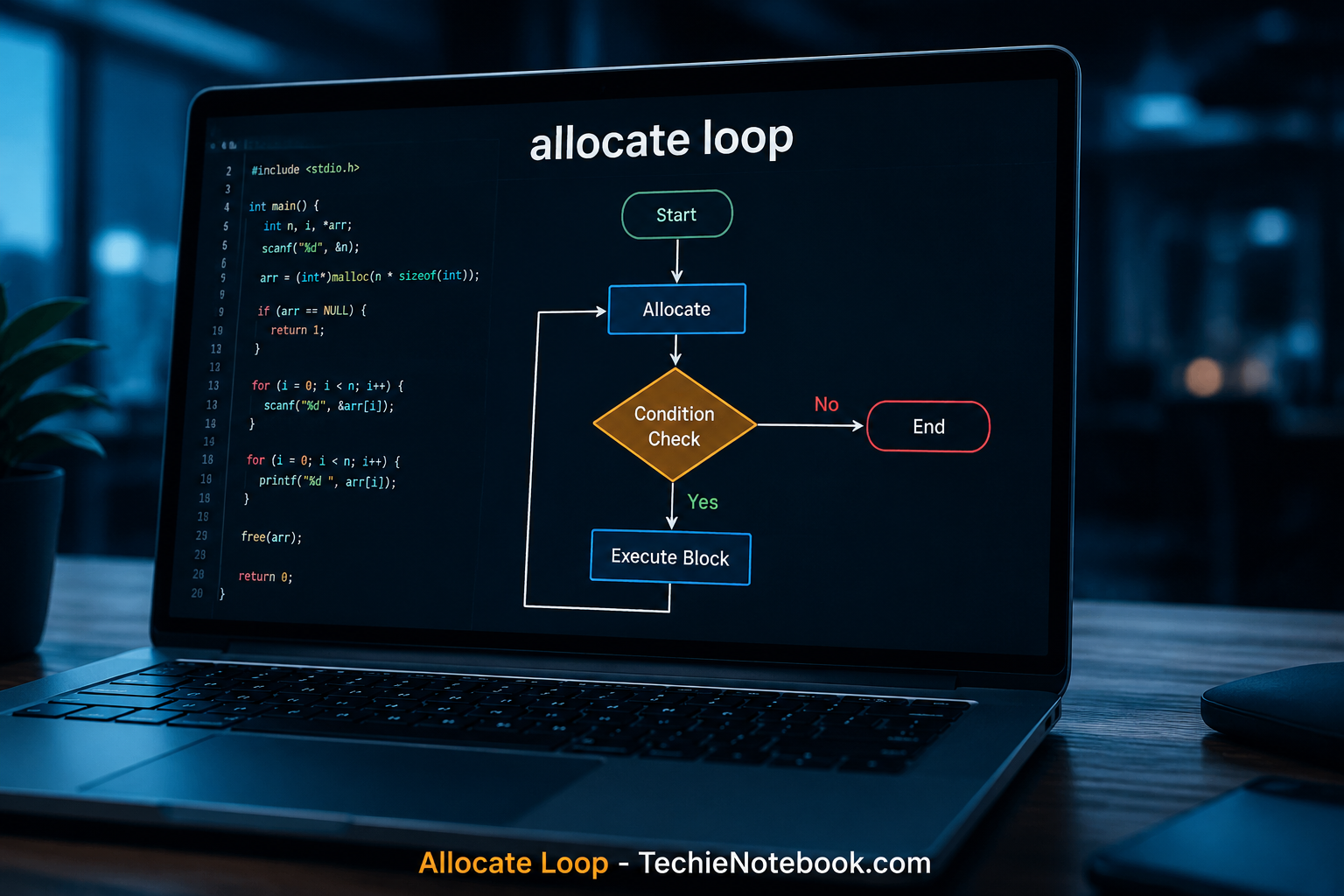
Allocate Loop
Allocate loop is a technical concept used in system design and computing processes where resources are assigned repeatedly in a structured cycle. It helps manage memory, tasks, or data flow efficiently in controlled environments. Understanding this concept is useful for developers, engineers, and system architects working with dynamic workloads.
Below is a quick reference overview of allocate loop fundamentals.
| Field | Details |
| Concept Name | Allocate Loop |
| Category | System Design / Computing |
| Primary Use | Resource Allocation Cycle |
| Core Function | Repeated assignment of system resources |
| Environment | Software & Hardware Systems |
| Complexity Level | Intermediate |
| Key Benefit | Efficient resource distribution |
| Common Area | Operating systems, schedulers |
| Related Idea | Memory allocation |
| Performance Role | Optimization of execution flow |
| Structure Type | Loop-based control system |
| Dependency | System resources |
| Output | Balanced allocation results |
What is allocate loop
Allocate loop refers to a repeating process where system resources are assigned, checked, and reassigned in cycles. This mechanism ensures that computing tasks receive required memory or processing power without interruption.
It is commonly used in environments where demand changes rapidly, such as operating systems or distributed computing systems. The loop continues until tasks are completed or resources are rebalanced.
By using this structure, systems avoid overload and maintain steady performance even under heavy workloads.
allocate loop in programming systems
In programming environments, allocate loop plays a role in managing dynamic memory and task execution. It helps ensure that each process gets fair access to system resources.
Developers use similar looping structures to allocate memory blocks during runtime. This prevents memory leaks and improves system stability during long execution cycles.
The concept is especially useful in low-level programming, where direct resource control is required for performance efficiency.
How allocate loop works
The working of allocate loop starts with identifying available system resources. Once detected, the system enters a cycle where resources are distributed based on priority and demand.
After allocation, the system continuously checks resource usage. If imbalance occurs, the loop adjusts allocations automatically to maintain stability.
This cycle repeats until all tasks are completed or the system resets its allocation state.
allocate loop architecture
Allocate loop architecture is built on a feedback-based structure. It includes monitoring units, allocation logic, and control mechanisms working together.
The monitoring unit tracks system usage in real time. The allocation logic decides how resources should be distributed across processes.
The control mechanism ensures adjustments happen smoothly without disrupting active tasks or processes.
benefits of allocate loop
One of the main benefits of allocate loop is efficient resource management. It reduces waste by ensuring that no system resource remains unused or overloaded.
It also improves system responsiveness, especially in environments with multiple running processes. This leads to better performance and reduced latency.
Another advantage is scalability, as the loop adapts easily to increasing workloads without major system changes.
challenges of allocate loop
Despite its advantages, allocate loop can face challenges in complex systems. One issue is overhead caused by continuous monitoring and adjustments.
Another challenge is incorrect allocation logic, which may lead to uneven resource distribution. This can slow down system performance instead of improving it.
In some cases, debugging allocate loop structures becomes difficult due to their repetitive and dynamic nature.
allocate loop in real applications
Allocate loop is widely used in operating systems for memory management and process scheduling. It ensures that applications receive required resources without conflicts.
In cloud computing, it helps balance workloads across servers by redistributing tasks dynamically. This improves system uptime and reliability.
It is also used in embedded systems where limited resources must be carefully managed for continuous operation.
best practices for allocate loop
To use allocate loop effectively, developers should design clear allocation rules. These rules help avoid conflicts and ensure smooth execution of processes.
Monitoring should be optimized to avoid unnecessary system overhead. Efficient tracking improves performance without slowing down the loop.
Testing under different workloads is also important to ensure stability in real-world conditions.
allocate loop FAQs
What is the main purpose of allocate loop?
It is used to distribute system resources in a repeating cycle to maintain performance and balance workload.
Where is allocate loop commonly used?
It is commonly used in operating systems, cloud systems, and memory management processes.
Does allocate loop improve performance?
Yes, it helps improve performance by ensuring balanced and efficient resource usage.
What are the risks of allocate loop?
Improper configuration can lead to overhead or uneven resource distribution.
Is allocate loop used in modern systems?
Yes, modern computing systems still use similar loop-based allocation methods for efficiency.
Conclusion
Allocate loop is an important mechanism in computing systems that ensures continuous and balanced resource distribution. Its loop-based structure allows systems to adapt to changing workloads efficiently.
Although it requires careful design and monitoring, its benefits in performance and scalability make it valuable in modern technology environments.
Read more: iofbodies.com ethics: A Complete Guide to Digital Responsibility and Online Trust
About the Author