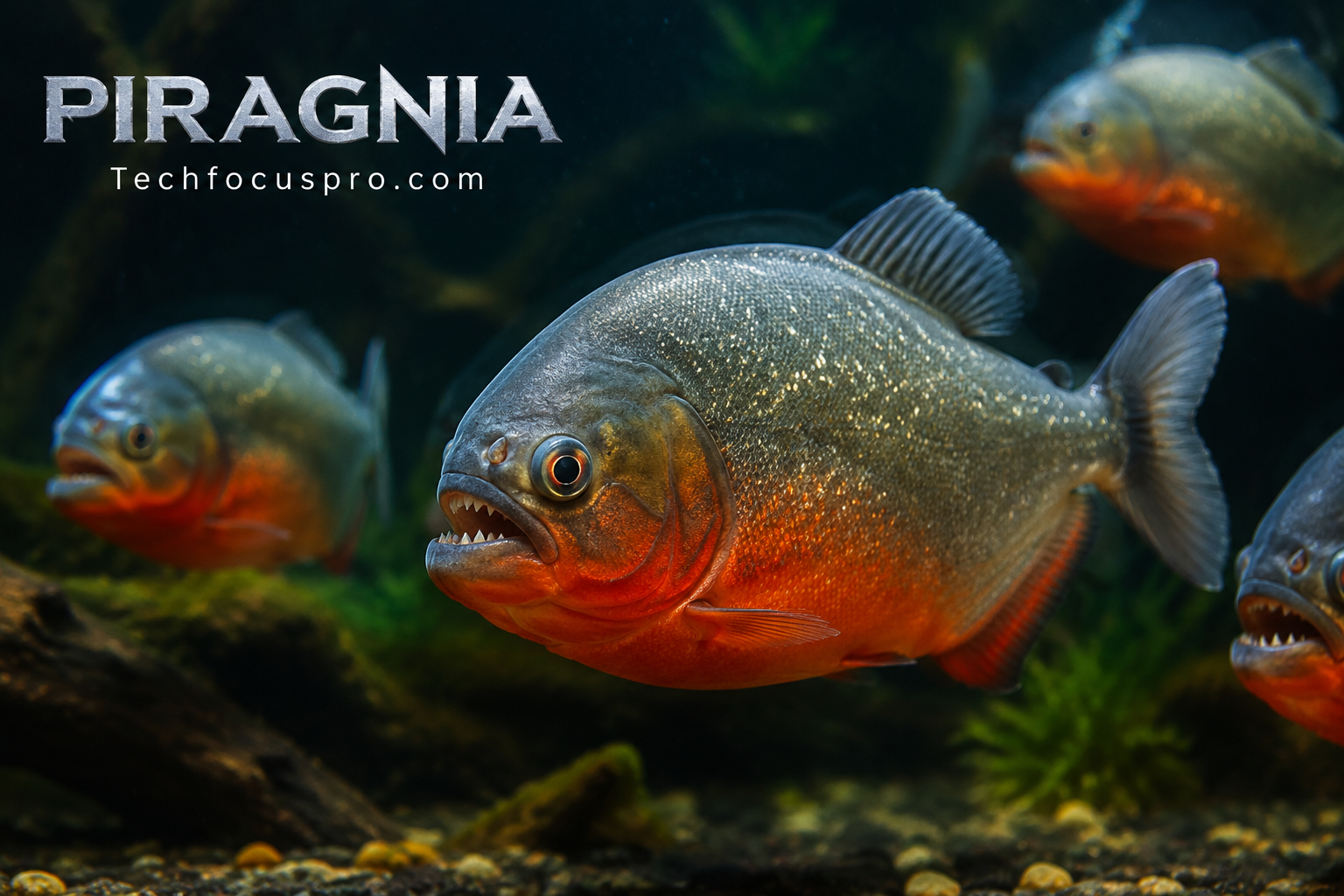
Piragnia
Piragnia is often discussed as a mysterious freshwater fish known for its sharp teeth and strong survival instincts in aquatic ecosystems.
Many people confuse piragnia with other aggressive river species, but it has its own unique biological identity and behavior patterns.
In this guide, we explore piragnia in detail, including its habitat, feeding style, and interaction with nature and humans.
Understanding piragnia helps in learning how river ecosystems maintain balance and biodiversity.
| Quick Bio Table | |
| Common Name | Piragnia |
| Scientific Group | Freshwater Fish Category |
| Natural Habitat | Rivers and freshwater lakes |
| Diet Type | Carnivorous |
| Average Size | Small to medium species |
| Behavior | Alert and defensive |
| Lifespan | 10–15 years (varies by environment) |
| Region Found | South American river systems |
| Water Type | Freshwater |
| Activity Level | Highly active |
| Conservation Status | Varies by species |
| Known For | Sharp teeth and fast movement |
Piragnia Overview and Natural Background
Piragnia is a freshwater fish often associated with fast movement and strong survival instincts in rivers.
It belongs to a group of fish that are adapted to tropical and warm freshwater environments.
The behavior of piragnia is shaped by competition for food and protection from predators in the wild.
In many ecosystems, piragnia plays an important role in maintaining natural balance.
The name piragnia is commonly linked with the well-known piranha, although local naming variations exist in different regions.
These fish are often misunderstood due to their appearance and feeding behavior in groups.
However, they are not constantly aggressive and usually respond to environmental stress.
Their survival skills make them one of the most studied freshwater fish groups.
Piragnia Habitat and Environmental Conditions
Piragnia is mainly found in warm freshwater rivers with slow to moderate currents.
Dense vegetation and shaded water areas provide them safety and feeding opportunities.
They prefer environments rich in small fish, insects, and organic material.
Seasonal water changes strongly affect piragnia movement and behavior patterns.
During rainy seasons, they spread across wider floodplain areas for feeding.
In dry seasons, they often gather in deeper river sections for survival.
Water temperature plays a major role in their activity levels and reproduction cycles.
Clean and oxygen-rich water helps piragnia maintain strong health and energy levels.
Polluted environments can reduce their population over time significantly.
Piragnia Feeding Habits and Behavior
Piragnia is known as a carnivorous feeder with a strong sense of smell in water.
It usually feeds on small fish, insects, and occasionally plant-based organic matter.
Group feeding behavior is often observed when food sources are limited.
Contrary to popular belief, piragnia does not attack large animals regularly.
Most feeding activity is triggered by scarcity or environmental stress conditions.
Their sharp teeth are mainly used for tearing and quick feeding efficiency.
Piragnia behavior changes based on group size and river conditions.
In larger groups, they show more confidence and coordinated movement patterns.
However, they still avoid unnecessary risk when larger predators are nearby.
Piragnia Reproduction and Life Cycle
Piragnia reproduction usually takes place in warmer seasons when water levels rise.
Female piragnia lay eggs in hidden areas such as plants or riverbed structures.
Male fish often protect the nesting area from potential threats.
The eggs hatch within a few days depending on water temperature conditions.
Young piragnia grow quickly during the early stages of their life cycle.
Survival depends heavily on food availability and environmental safety.
As they mature, piragnia develop stronger teeth and improved hunting abilities.
They gradually move from protected areas into open water zones.
Adult piragnia can survive in both group and semi-independent conditions.
Piragnia and Human Interaction
Piragnia has long been misunderstood due to exaggerated media representation.
In reality, human encounters with piragnia are rare and usually non-dangerous.
Most incidents occur only when fish feel threatened or trapped.
Local communities living near rivers are often aware of piragnia behavior patterns.
They avoid feeding or disturbing fish populations to maintain safety.
Fishing practices are carefully managed in many regions to protect ecosystems.
Piragnia also plays an important ecological role in cleaning river environments.
By feeding on weak or dead organisms, they help maintain natural balance.
This makes them an important part of freshwater biodiversity systems.
Interesting Facts About Piragnia
Piragnia has one of the strongest bite structures among freshwater fish species.
Despite their reputation, they are highly sensitive to environmental changes.
They communicate using movement patterns and water vibrations.
Some piragnia species can survive in low-oxygen environments for short periods.
They are known to form temporary groups for feeding efficiency.
Their teeth continuously regenerate throughout their lifespan.
Piragnia can detect blood and movement from long distances in water.
However, they do not always respond aggressively to such signals.
Their behavior is more survival-driven than purely aggressive.
Final Thoughts on Piragnia
Piragnia remains one of the most fascinating freshwater fish due to its behavior and adaptability.
It is often misunderstood, but its ecological role is important in natural water systems.
Studying piragnia helps scientists understand river ecosystems better.
Balanced ecosystems depend on species like piragnia to maintain population control.
Their survival shows how nature builds strong and adaptable life forms.
Understanding piragnia leads to better awareness of aquatic biodiversity.
FAQs About Piragnia
Q1: What is piragnia?
Piragnia is a freshwater fish known for its sharp teeth and group behavior in river ecosystems.
Q2: Is piragnia dangerous to humans?
Piragnia is generally not dangerous unless it feels threatened or trapped in extreme conditions.
Q3: Where is piragnia commonly found?
It is mainly found in warm freshwater rivers, especially in South American regions.
Q4: What does piragnia eat?
Piragnia feeds on small fish, insects, and sometimes organic plant material.
Q5: How long does piragnia live?
Depending on environmental conditions, piragnia can live around 10–15 years.
Q6: Why is piragnia important in nature?
Piragnia helps maintain ecological balance by controlling fish populations and cleaning river ecosystems.
Read more: Kaley Cuoco Nuxe: Beauty Influence and Natural Skincare Inspiration
About the Author